Access to Maternal Health for Migrant Families: Issues and Challenges (UK)
For many migrant families in the UK, pregnancy is shaped not only by anticipation but by uncertainty. Barriers to accessing maternity care — from language to policy — continue to affect outcomes for mothers and babies.
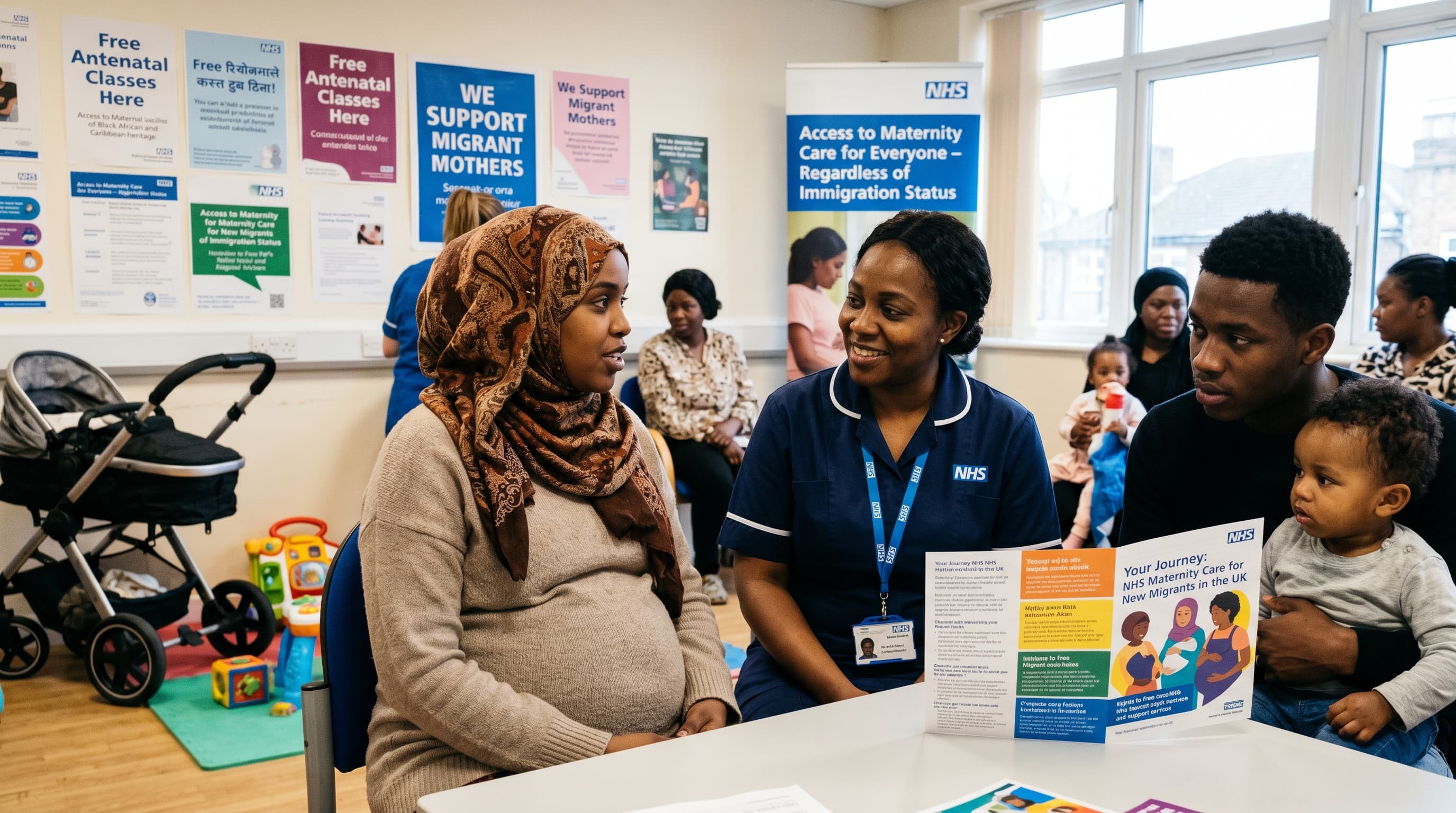
A Growing and Diverse Population
Migrant families are an integral part of the UK population. Data from the Office for National Statistics shows that around 28% of live births in England and Wales are to non-UK-born mothers. This underlines the need for maternity services that are inclusive and responsive to diverse cultural, linguistic, and social needs.
Despite this, access to care is not always equal.
Barriers Within the System
In principle, NHS maternity care is classified as “immediately necessary” and should not be denied. However, in practice, migrant women, particularly those with insecure immigration status, can face confusion about eligibility and fear of charges under NHS overseas visitor rules.
Language barriers further complicate access. While interpretation services exist, they are not always consistently available, making it harder for some women to fully understand their care or communicate concerns. Cultural differences and previous experiences with healthcare systems can also influence trust and engagement.
Impact on Maternal Outcomes
The consequences of these barriers are reflected in national data. According to MBRRACE-UK, women from Black ethnic backgrounds in the UK are nearly four times more likely to die during pregnancy or shortly after childbirth than White women, while Asian women are around twice as likely.
Although ethnicity and migration status are not identical, there is significant overlap, and the findings point to persistent inequalities. Late access to antenatal care, — more common among migrant women — is associated with increased risks, including complications during pregnancy and birth.
The Human Reality
Behind these figures are real experiences. Many migrant women navigate pregnancy without strong support networks, while also dealing with financial pressures, housing insecurity, or uncertain legal status.
For some, attending a routine antenatal appointment involves weighing health needs against fears of cost or exposure. These challenges can lead to delayed care, missed appointments, and increased anxiety during what should be a supported and safe period.
Healthcare professionals often work hard to bridge these gaps, but system pressures and resource constraints can limit what is possible.
Towards More Equitable Care
Improving access requires both policy and practice changes. Clearer communication about entitlements, consistent access to professional interpreters, and reassurance around confidentiality are key.
Organisations such as NHS England and community-based groups are working to improve outreach and culturally competent care, but more coordinated action is needed.
Separating healthcare access from immigration enforcement and strengthening community support networks can help ensure that no woman is excluded from essential care.
Conclusion
Access to safe maternal healthcare is a fundamental right. Addressing the barriers faced by migrant families is essential not only for improving health outcomes but for building a fairer and more inclusive NHS.
When every mother can access care without fear or delay, the benefits extend far beyond individual families — strengthening communities and society as a whole.
For more information, go to www.mychildandme.uk.
Tags
Enjoyed this post?
Discover more insights and join our community of parents supporting each other.