Celebrating Black Family Culture in the UK: What We Keep, What We Adapt
A powerful look at how Black families in the UK preserve cultural values while adapting to a new environment—highlighting faith, storytelling, discipline, and community strength.
Introduction
Moving to the UK often comes with hope - new opportunities, better systems, and a fresh start for our children. But alongside that hope is a quiet question many Black families carry: How do we hold on to who we are while adjusting to where we are?
For many of us, culture isn’t something we can simply switch off. It shows up in how we speak, how we raise our children, how we celebrate, and how we connect. Living in the UK doesn’t erase that; it challenges us to be more intentional about it. Research from the Migration Observatory highlights how migrant families often maintain strong cultural ties while adapting to new social environments, something many of us experience daily.
Holding on to What Grounds Us
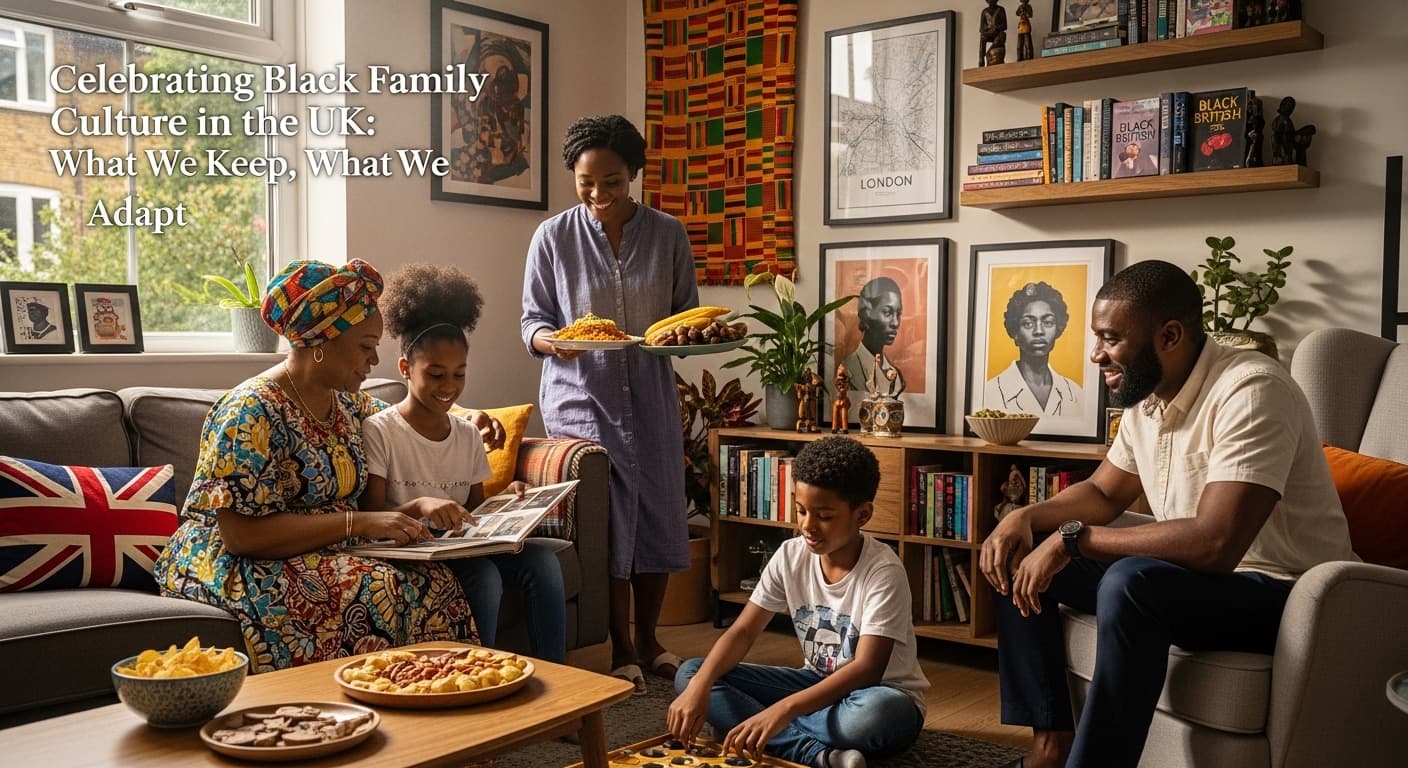
In many Black homes, culture lives in the everyday moments. It’s in the meals we cook, the music playing in the background, the languages we speak, and the way we greet elders or gather as a family.
These aren’t just habits; they are anchors. They remind our children where they come from, even if they are growing up miles away from it.
Storytelling, in particular, remains powerful. Whether it’s sharing childhood memories, cultural proverbs, or lessons passed down from our own parents, these stories quietly shape our children’s understanding of identity, respect, and resilience. According to The Runnymede Trust, maintaining cultural identity plays a significant role in helping Black children build confidence and a strong sense of belonging in British society.
Faith and Inner Strength
For many families, faith continues to be a steady foundation. It offers comfort in unfamiliar spaces and guidance when things feel uncertain.
Places of worship often become more than spiritual spaces; they become community hubs. They are where friendships form, support systems grow, and children see a reflection of themselves.
In a society that can sometimes feel isolating, faith helps many families stay grounded, hopeful, and connected. Studies referenced by the UK Department for Education show that strong community and parental engagement - often fostered through faith groups - can positively influence children’s well-being and development.
Rethinking Discipline Without Losing Values
One of the biggest adjustments for many parents is around discipline. What felt normal “back home” may be questioned or even challenged in the UK.
This can feel uncomfortable at first. But many parents are finding a middle ground: holding on to strong values like respect, responsibility, and accountability, while also embracing more open communication and emotional awareness.
It’s not about abandoning what we were taught. It’s about refining it. Learning how to guide our children in ways that build trust, not just obedience. Guidance from NSPCC encourages positive parenting approaches that prioritise emotional connection while still maintaining clear boundaries, something many migrant families are learning to integrate.
The Power of Community
Even in a new country, the idea that “it takes a village” still holds true. Many Black families naturally seek out community through friends, cultural groups, schools, or places of worship.
These spaces matter. They remind us that we are not alone. They give our children a sense of belonging and help them see others with similar backgrounds and experiences.
Community becomes a place where both parents and children can breathe a little easier. Research from the Migration Observatory again highlights the essential role of social networks in migrant integration and family stability.
Adapting Without Losing Ourselves
Adapting to life in the UK (or any foreign country for that matter) is unavoidable. Our children are exposed to different ways of thinking, learning, and expressing themselves, and often, they adjust faster than we do.
That gap can sometimes create tension. But it can also create growth.
The goal isn’t to resist change or fully embrace everything new without question. It’s to find balance. To raise children who can move confidently in both worlds, grounded in their heritage, yet open and adaptable. Insights from The Runnymede Trust reinforce the importance of this balance in shaping positive outcomes for Black families navigating life in Britain.
Conclusion
Black family culture doesn’t disappear in the UK - it evolves.
In the middle of change, there is strength. In the blending of cultures, there is beauty. And in the choices we make as parents, there is the power to shape a generation that knows exactly who they are.
We are not just adjusting, we are building something meaningful, one family at a time, holding on to what matters, while embracing what helps our families grow.
For more resources, go to www.mychildandme.uk.
Tags
Enjoyed this post?
Discover more insights and join our community of parents supporting each other.