Helping Immigrant Children Deal With Discrimination and Bias
Immigrant children may face discrimination because of their accent, appearance, culture or back-ground. Learn how parents can listen, build confidence, strengthen cultural identity and work with schools to help children navigate bias.
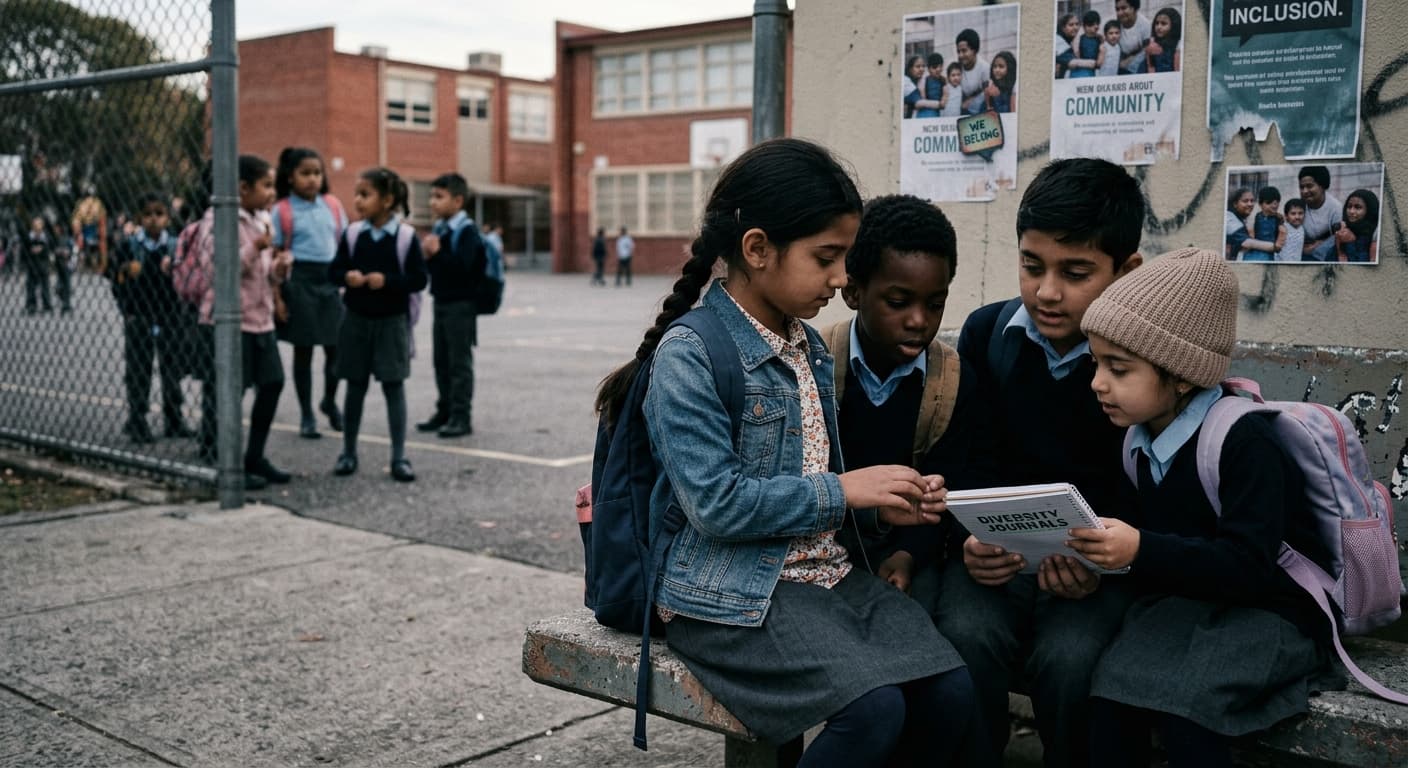
It can be an exciting experience for a child to move to a new country since there are new schools, new friendships, as well as new opportunities and experiences on the horizon. However, along with the excitement there may be something that parents are not always ready for, that is, discrimination and bias.
A child can be teased on account of their accent, be excluded because of their name, be asked where they are 'really from', or be treated in a different way because of their skin colour, culture or religion. In some cases the discrimination is obvious, while in other cases it appears in the form of assumptions, jokes, lower expectations or social exclusion.
According to UNICEF, children who are on the move are often subjected to discrimination, xenophobia and stigma, and the organisation cautions that such exclusion can have an effect on their mental health and result in obstacles to access essential services.
Listen Before You Try to Fix It
When a child comes home upset because of discrimination, the first thought might be to tell them to "ignore it" or "not worry about what people say."
However the child might need is to have themselves heard.
Find out what took place and listen without at once rejecting the experience or asking if they had misunderstood. Saying "I can see why that hurt you" can give a child the reassurance that their feelings are important.
It does not imply that we are supposed to consider every difficult interaction was intentionally discriminatory; rather, it means setting up a safe environment so that your child can discuss what took place and go over it with you.
Help Them Understand Their Identity
Kids raised in two cultures may at times feel as though they are stranded between two worlds, and parents can help by ensuring that their heritage is honoured at home rather than feeling obliged to conceal it.
Describe the history of your family, the language you speak, the values you hold and the traditions you have, as well as your family's achievements. Offer children the chance to see people who resemble them achieving success in a variety of professions and areas of life.
It can enhance their feeling of identity and enable them to react in a more healthy way when other people make ignorant assumptions about them.
Teach Them How to Respond
What children need are practical tools, not simply encouragement to 'be strong'.
According to their age and the particular situation, teach them to speak up calmly, to move away from unsafe situations, to ask a reliable adult for help and to report cases of repeated bullying or discrimination.
With older children, it is important to explain the difference between responding confidently and putting oneself in danger, and standing up for oneself does not necessarily mean facing someone directly.
Work With the School
Parents need not feel that it is up to their child to deal with discrimination by themselves.
If bullying incidents are recurring or serious, talk to teachers, pastoral staff, or school leaders, and ask about the school's anti-bullying and equality policies, as well as how concerns are recorded and addressed.
According to OECD research, students' sense of belonging is important. In the OECD PISA 2025 study, 76 per cent of students from OECD countries stated that they felt they belonged at school, whereas previous PISA research indicated that students with an immigrant background had a weaker sense of belonging in a number of education systems.
Don’t Let Someone Else’s Bias Define Your Child
The most important point is that your child's value is not determined by someone else's prejudice.
Make it clear that the issue is the assumptions or behaviour of the person being discriminatory, not the child's intelligence, ability, or potential.
Don't forget that immigrant children do not form a single group; their experiences vary according to age, country of origin, language, socioeconomic situation, and whether they were born in the new country or had come there at a later stage. According to the OECD's PISA 2025 data, on average 18 per cent of the students in the 29 OECD countries had an immigrant background.
Parents, schools, and communities have a responsibility not only to teach children how to survive prejudice but also to create situations in which fewer children have to encounter it.
Tags
Enjoyed this post?
Discover more insights and join our community of parents supporting each other.