Prison: Justice, Punishment, or Second Chances?
Is prison meant to punish or to rebuild lives? With reoffending rates still high, the debate around justice, rehabilitation, and second chances has never been more urgent.
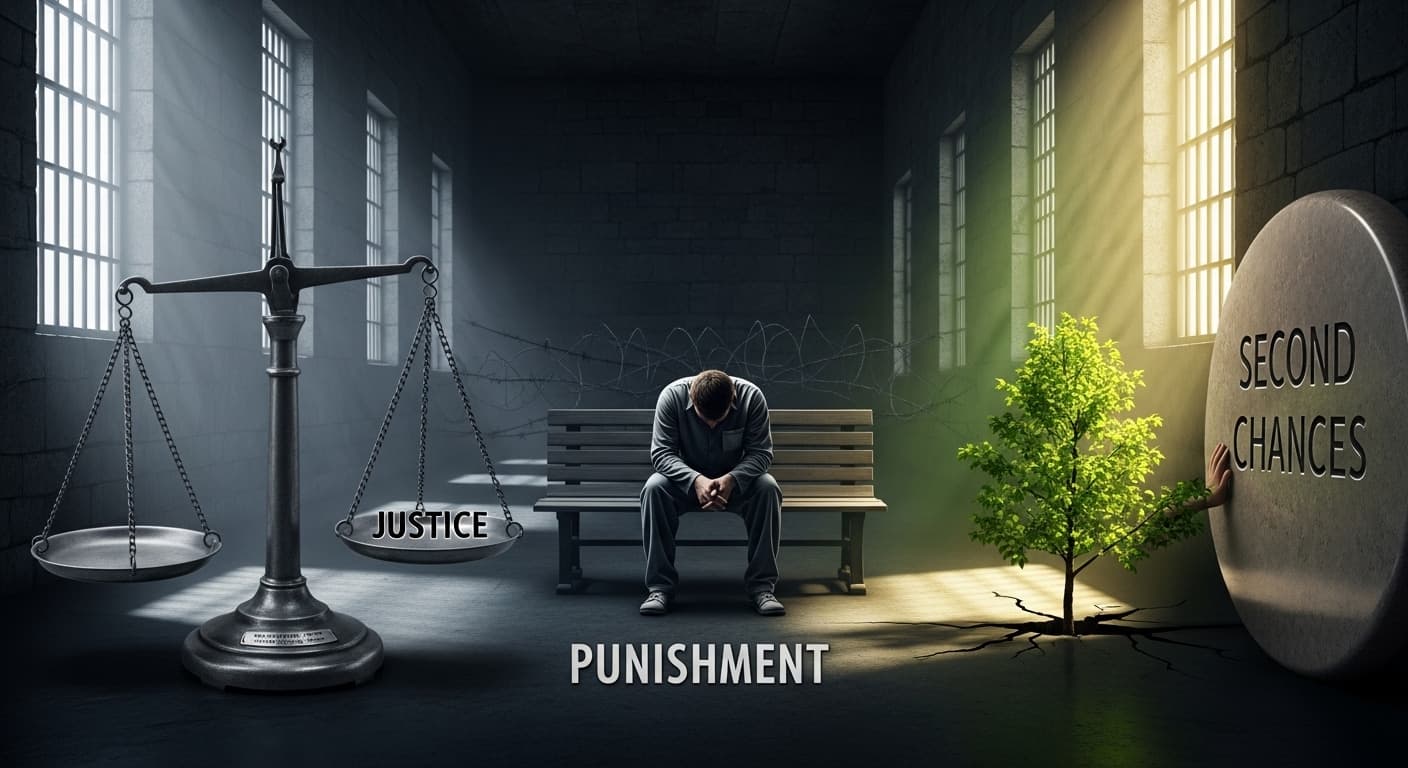
A System Under Pressure
Across England and Wales, the prison system continues to face mounting challenges. As of 2025, the prison population exceeds 88,000, placing a significant strain on facilities, staffing, and resources. Overcrowding has become a persistent issue, often limiting access to education, mental health services, and rehabilitation programmes.
While prisons are designed to protect the public and deliver justice, the reality inside many institutions can make long-term change difficult to achieve. This raises an important question: is the system structured to reform individuals, or simply to contain them?
Punishment vs Rehabilitation
For many, prison represents accountability, a necessary consequence for harmful actions. It can provide a sense of justice for victims and deter others. However, punishment alone rarely addresses the underlying causes of criminal behaviour.
This suggests that, in its current form, prison is not consistently breaking the cycle of crime.
If individuals leave prison without the tools to rebuild their lives, the likelihood of returning to old patterns remains high. This is where the debate shifts from punishment alone to what happens next.
The Case for Second Chances
Rehabilitation focuses on tackling the root causes of offending, including poverty, trauma, lack of education, substance misuse, and limited employment opportunities. Without addressing these factors, the system risks becoming a revolving door.
Evidence consistently shows that people who participate in education and skills training while in custody are less likely to reoffend. Access to stable housing, employment, and community support upon release further strengthens the chances of successful reintegration.
Second chances are not about overlooking harm or avoiding accountability. They aim to reduce future harm by creating pathways out of crime. When rehabilitation works, it benefits not just the individual, but society as a whole.
A More Balanced Approach
The conversation should not be framed as punishment versus rehabilitation. A more effective system integrates both—holding individuals accountable while equipping them with the tools to change.
This requires investment in prison education, mental health services, and post-release support systems. It also requires stronger collaboration between government agencies, community organisations, and employers willing to offer opportunities to those with criminal records.
Ultimately, safer communities are built not just through enforcement, but through prevention and reintegration.
The Human Side of Justice
Behind every statistic is a human story; someone’s child, sibling, or parent. Many individuals in prison have experienced significant disadvantage, including childhood trauma, exclusion from education, or unstable living conditions.
Recognising this does not excuse criminal behaviour, but it does highlight the importance of early intervention and support. A system that acknowledges these realities is better positioned to create meaningful, lasting change.
Humanising justice allows us to move beyond labels and towards solutions that reduce harm over the long term.
Conclusion
So, is prison about justice, punishment, or second chances? In reality, it must be all three. Justice requires accountability, but lasting safety depends on what happens after that accountability is enforced.
Without a stronger focus on rehabilitation, high reoffending rates will continue to undermine the system’s purpose. Real justice is not only about time served — it is about whether individuals can return to society and build a different future.
Resources:
Paradigm Project: https://paradigmproject.co.uk/meet-our-founder/
My Child and Me: www.mychildandme.uk/
Tags
Enjoyed this post?
Discover more insights and join our community of parents supporting each other.