Shared Experiences: “Wait… That Happened to You Too?”
What if the childhood memories you thought were uniquely yours were actually part of a wider cultural thread? This light-hearted reflection explores how shared experiences in Black culture build community, identity, and belonging across generations.
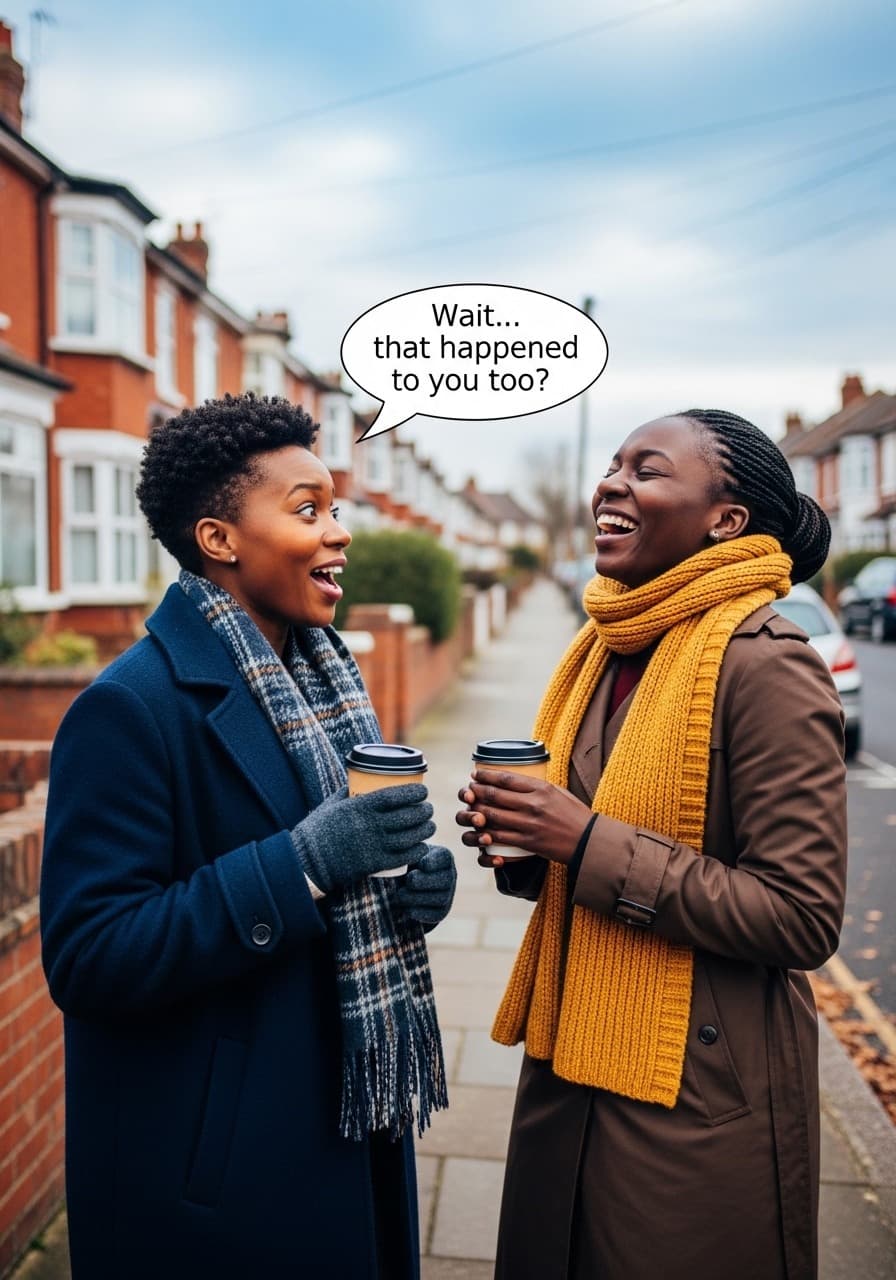
Many people are surprised to find out how much their childhood experiences have in common with others.
Have you ever listened to someone talk about their childhood, like getting a strict look from a parent, a Sunday routine, or a phrase shouted across the house, and thought:
Wait… I thought that was just my family?
There is something comforting (and often hilarious) about discovering that what felt deeply personal was actually part of a wider Community experience.
The Little Things We Thought Were “Just Us”
Maybe it was the “special” plate reserved only for guests.
Or the dramatic calling of your full name when you were in trouble.
Or that one chair in the living room children were forbidden to sit on.
Or the well-known “slipper phenomenon” familiar in many African and Asian homes.
Across many Black Culture households, these moments feel almost universal. You grow up thinking your mum invented that sharp side-eye. Then you meet someone from a completely different family — sometimes even a different country — and realise they experienced the exact same thing.
Culture as a Thread That Connects Us
Shared experiences connect us more than we realise.
If you grew up in a similar era, you likely share cultural reference points — Saturday morning cleaning with loud music, clear expectations about respecting elders, greeting visitors properly, and understanding unspoken household rules.
If you grew up within a similar Culture, the ties can feel even stronger: the food, the proverbs, the discipline style, the emphasis on collective responsibility.
These are not coincidences. They are cultural threads.
And those threads weave Community.
Why Shared Memories Matter
There is a special joy in laughing with others about childhood memories that once felt serious. Things that seemed strict can become funny, and what felt isolating can turn into something shared.
Sociologist Émile Durkheim argued that shared rituals and collective experiences build social cohesion. (Collective Effervescence, n.d.) In simple terms, when we experience similar things, we bond more easily.
In the Black Community especially, storytelling helps keep culture alive. When we talk about our upbringing, the discipline, the expectations, and the celebrations, we validate each other and build stronger connections.
And belonging matters deeply.
Bridging Generations Through Reflection
Shared experiences also help bridge generations.
When parents reflect on their own childhood and notice familiar patterns in their own homes, it creates space for intentional growth. We can preserve the warmth, respect, and resilience embedded in our Culture while thoughtfully reshaping practices for a new generation.
Community is not built only through grand gestures. Sometimes, it is built through laughter over shared memories.
So the next time someone tells a childhood story that sounds surprisingly familiar, don’t be startled.
Smile.
Because chances are, you were never alone in that experience.
And perhaps that is one of the quiet gifts of Community — discovering that your story has always been part of something bigger.
Want to find spaces to share your experiences? Join our programmes at www.mychildandme.uk
Tags
Enjoyed this post?
Discover more insights and join our community of parents supporting each other.